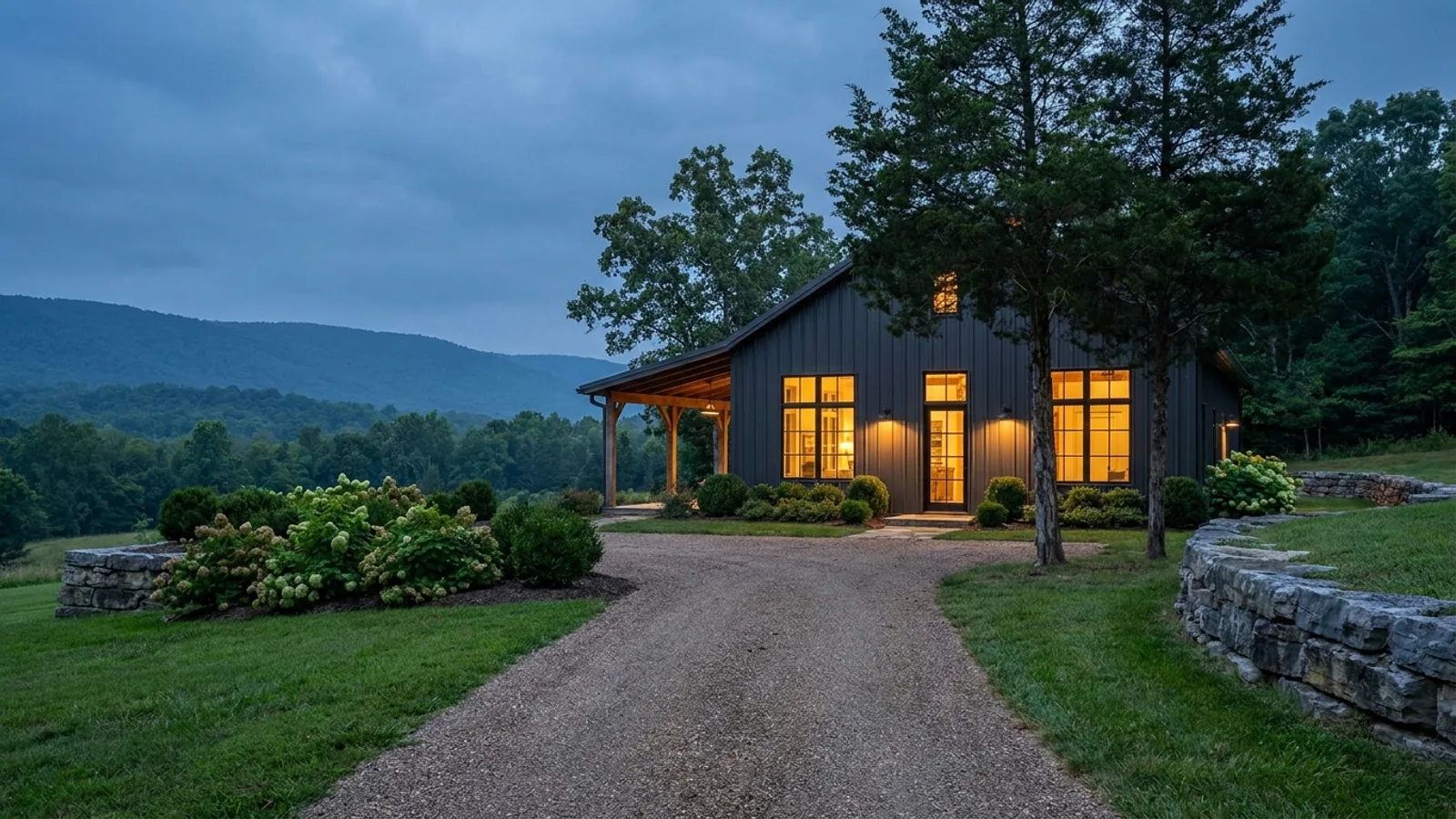
Barndominium Builders in Nashville, TN
Nashville and Davidson County are one government, which makes this the only place in Tennessee where the city and the county are not two separate building authorities with two sets of adopted codes. Metro Codes and Building Safety runs the building code out to the county line under Charter section 1.05, and it runs it on the 2024 International Residential Code, six editions ahead of the code most of the state is working from. The catch is where the land is: nearly all the acreage a building of this type wants sits in the general services district, outside the sewered urban core, on septic and under Metro's own health department.
Nashville at a glance
- County
- Davidson County
- Population
- 729,505
- ZIP codes
- 37013, 37072, 37076, 37080, 37115, 37138, 37189, 37201, 37203, 37204, 37205, 37206, 37207, 37208, 37209, 37210, 37211, 37212, 37214, 37215, 37216, 37217, 37218, 37219, 37220, 37221, 37228
- Site visits
- About 20 miles north of our Franklin office, straight up I-65
Building conditions in Nashville
What actually changes from one Tennessee jurisdiction to the next: who issues the permit, whether the residential code is enforced there at all, what the structure has to be engineered to, and what the ground is like. These are the numbers your drawings have to satisfy.
Metropolitan Charter of Nashville and Davidson County, sections 1.01, 1.02, 1.03 and 1.05, library.municode.com, code current through Ordinance BL2025-1141 approved 17 December 2025. Fetched 31 Aug 2026
Metro Ordinance BL2025-898, section 16.08.014.F, amending Table R301.2 of the 2024 IRC. Passed on third reading 15 July 2025, approved by the Mayor 16 July 2025. nashville.legistar.com, fetched 31 Aug 2026
Metro Ordinance BL2025-898 section 16.08.014.F (category C) compared with Ordinance BL2020-458 section 16.08.014.F (category B), approved 9 November 2020. nashville.legistar.com, fetched 31 Aug 2026
Metro Ordinance BL2025-898 section 16.08.010; Metro Codes and Building Safety, "Adopted Codes for Metro Nashville" and "Metro Adopts 2024 International Building Codes", nashville.gov, fetched 31 Aug 2026
Metro Ordinance BL2025-898, section 16.08.014.N, amending the general footings section of the 2024 IRC. nashville.legistar.com, fetched 31 Aug 2026
Metro Code of Ordinances sections 17.12.050 and 17.12.060.B, library.municode.com, code current through Ordinance BL2025-1141 approved 17 December 2025. Fetched 31 Aug 2026
Also worth knowing before you build in Nashville
- Enforcement status, with a date on it
- The State Fire Marshal's Office publishes every Tennessee jurisdiction as exempt, opt-out, or in the State Residential Building Program. Davidson County and Nashville appear on one line, marked exempt, alongside Belle Meade, Berry Hill, Forest Hills, Goodlettsville, Oak Hill and Ridgetop, all exempt. No part of Davidson County has opted out and no part is on state permits. The list is stamped accurate as of 21 August 2026.
- Septic is a Metro Health matter, not a state one
- Davidson is one of nine Tennessee counties that administers the subsurface sewage disposal programme under contract rather than through the state. Soil evaluation, percolation test monitoring, system design review and the permit all go through Metro Public Health at the Lentz Public Health Center, 2500 Charlotte Avenue, on (615) 340-5616. On a general services district site that call comes before the building permit conversation, not after.
- Permit fees, and what a house does not pay
- Residential building permits are $5.00 per $1,000 of total valuation. One- and two-family dwellings and townhouses are expressly excepted from the plans examination fee, which commercial work pays on top. Plumbing and gas or mechanical permits carry a $75.00 minimum each, a septic tank and disposal field line is $80.00, and a re-inspection is $50.00.
- The energy tables run on 2009 numbers
- Metro adopted the 2024 energy code and then amended the residential envelope back. The maximum assembly U-factor and minimum insulation R-value tables are deleted and replaced with the equivalents from the 2009 IRC, and air leakage testing is replaced with the 2009 Testing Option and Visual Inspection sections. An envelope specification taken from a national article about the current code will be stricter than what Davidson County actually enforces.
- No sprinkler requirement for a detached house
- Metro deletes the one- and two-family dwelling sprinkler section outright and writes a townhouse section that says a sprinkler system shall not be required. This is worth confirming locally rather than assuming, because Tennessee bars the state from mandating residential sprinklers but expressly allows a local government to go further. Nashville has gone the other way, in writing.
- Nothing in the zoning code bans metal walls on a house
- Title 17 contains one prohibition on sheet metal and corrugated metal, in section 17.24.210, and it applies to fencing used in landscape buffer yards inside the urban zoning overlay district. It does not reach the cladding of a dwelling. There is no material restriction on metal exterior walls for a site-built house in the county's zoning code, and no minimum floor area for a dwelling either.
- Which service district a parcel sits in
- The Charter created two districts: the general services district is the whole county, the urban services district was the old city and has grown by annexation where urban services followed. For 2025 the rates are $2.814 per $100 of assessed value in the urban district and $2.782 in the general district. The six satellite cities pay the general district rate plus their own. The acreage is almost all in the general district, which is also where septic and wells are.
- Seven zoning authorities, one building authority
- Consolidation in 1963 left six satellite cities holding their own charters, and Metro's own history notes they kept their police forces and zoning regulations. Belle Meade, Berry Hill, Forest Hills, Goodlettsville, Oak Hill and Ridgetop still set their own zoning. So the building code answer is county-wide while the zoning answer is not, and a parcel inside one of those six needs its zoning checked there.
- The county is growing faster than any other in Tennessee
- Davidson County reached 729,505 residents at 1 July 2024, adding 10,413 over the year. That was the largest numeric gain of any Tennessee county and Davidson's largest annual increase since 2015. Rutherford was second at 7,347. Growth of that shape is what keeps pressure on the remaining large parcels at the county edges.
Tennessee State Fire Marshal's Office, "Residential Jurisdictions & Inspectors", tn.gov/commerce/fire/residential-permits/jurisdictions-inspectors.html, fetched 31 Aug 2026
TDEC, "Third Party and Contract County SSDS", tn.gov/environment, naming Blount, Davidson, Hamilton, Jefferson, Knox, Madison, Sevier, Shelby and Williamson; Metro Public Health Department, "Septic and Sewage Disposal Systems", nashville.gov. Both fetched 31 Aug 2026
Metro Codes fee schedule, Metro Code sections 16.28.110, 16.12.220 and 16.16.400, nashville.gov Building Permit Fee Schedule 2025, fetched 31 Aug 2026
Metro Ordinance BL2025-898, section 16.08.014.O, amending Chapter 11 of the 2024 IRC. nashville.legistar.com, fetched 31 Aug 2026
Metro Ordinance BL2025-898, sections 16.08.014.J and 16.08.014.K, creating R309.1 and deleting R309.2 of the 2024 IRC. nashville.legistar.com, fetched 31 Aug 2026
Metro Code of Ordinances Title 17, sections 17.24.210 and 17.12.010, read in full via library.municode.com, code current through Ordinance BL2025-1141 approved 17 December 2025. Fetched 31 Aug 2026
Metropolitan Charter sections 1.03 and 1.04; Assessor of Property, Nashville and Davidson County, "Tax Rates & Calculator", padctn.org, 2025 rates. Fetched 31 Aug 2026
Metro Nashville, "History of Metropolitan Government", nashville.gov; Assessor of Property satellite city listing, padctn.org. Fetched 31 Aug 2026
Boyd Center for Business and Economic Research, Tennessee State Data Center, University of Tennessee, "Davidson County Tops 2024 List of Tennessee's Fastest Growing Counties", 16 May 2025, tnsdc.utk.edu. Fetched 31 Aug 2026
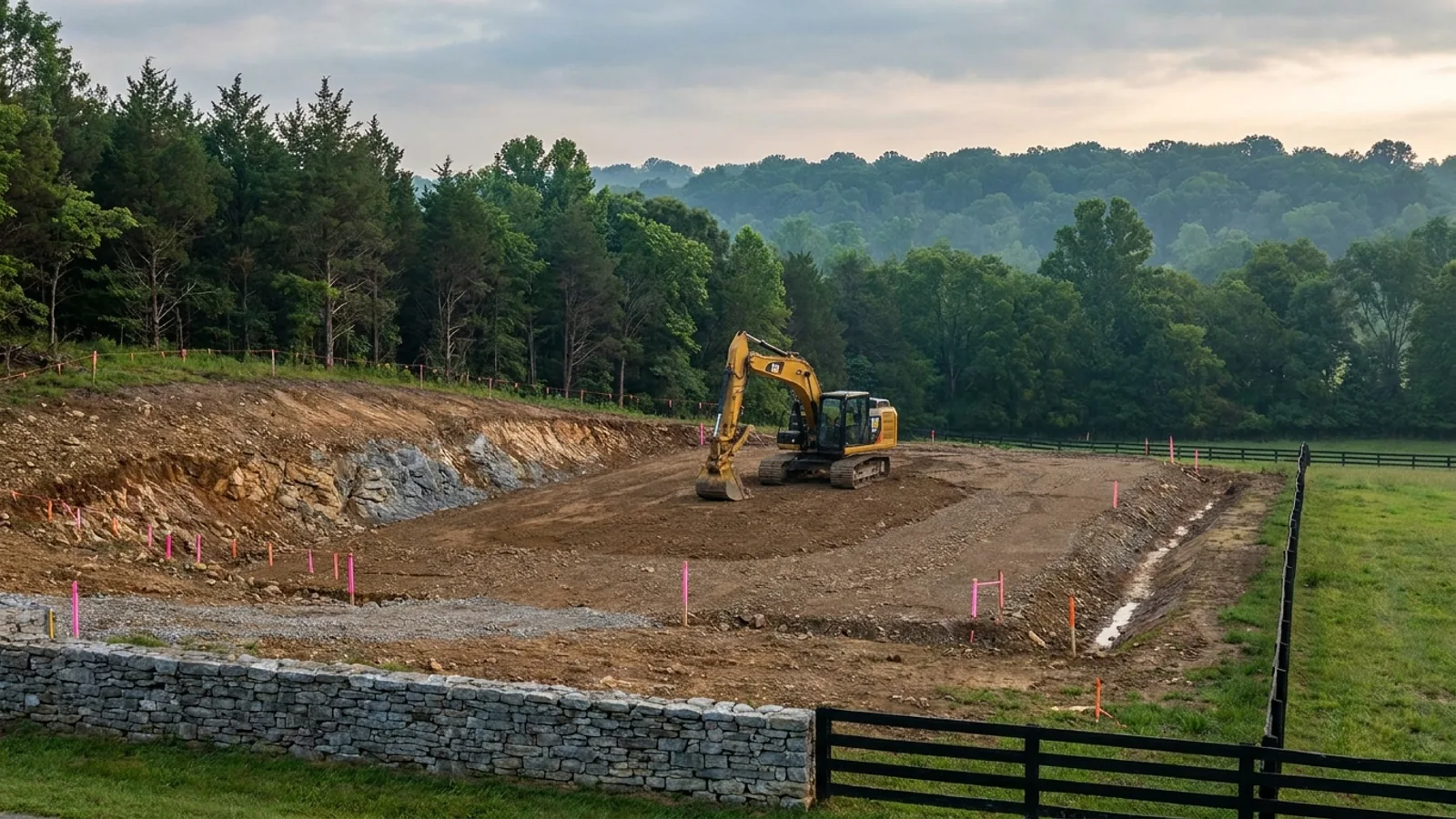
The expensive surprises are in the ground, not the building
What moves a Tennessee budget is usually below grade: limestone sitting shallow, karst voids and sinkholes, and slope. Those are the same conditions that decide whether a septic field passes its soil and site evaluation, so the grading plan, the footing depth and the drainfield get resolved together rather than one at a time. We price the dirt before we price the building.
What we build in Nashville
All nine services are available across Davidson County. What a build costs depends far more on the parcel than on square footage, so we price against your land rather than publishing a rate card.
Barndominium Kits
Engineered barndominium shell packages delivered to your Tennessee lot, stamped for the criteria your county adopted.
Turnkey Builds
Start to finish barndominium construction: we handle permits, slab, shell, and full interior finish.
Custom Plans
Barndominium floor plans drawn to your land, your family, and the residential code your county actually enforces.
Post-Frame Homes
Pole barn construction adapted into full residences, with wide clear spans and fast dry-in.
Steel Construction
Red-iron and light-gauge steel framing: no rot, no termites, engineered to your county’s adopted wind criteria.
Shouses
Shop and house in one building: workspace and living space under a single roof and a single permit.
Metal Homes
Full metal-clad residences: low maintenance envelopes specified to your Tennessee climate zone.
Site Preparation
Clearing, grading, pad, drainage, and utilities: the work that decides whether the build goes smoothly.
Permitting & Engineering
Sealed structural engineering and the permit that depends on it, from submittal through final inspection.
What a build looks like
Three stages every Nashville project passes through, from a raw parcel to a finished home. Site work first, because that is where the budget is decided.
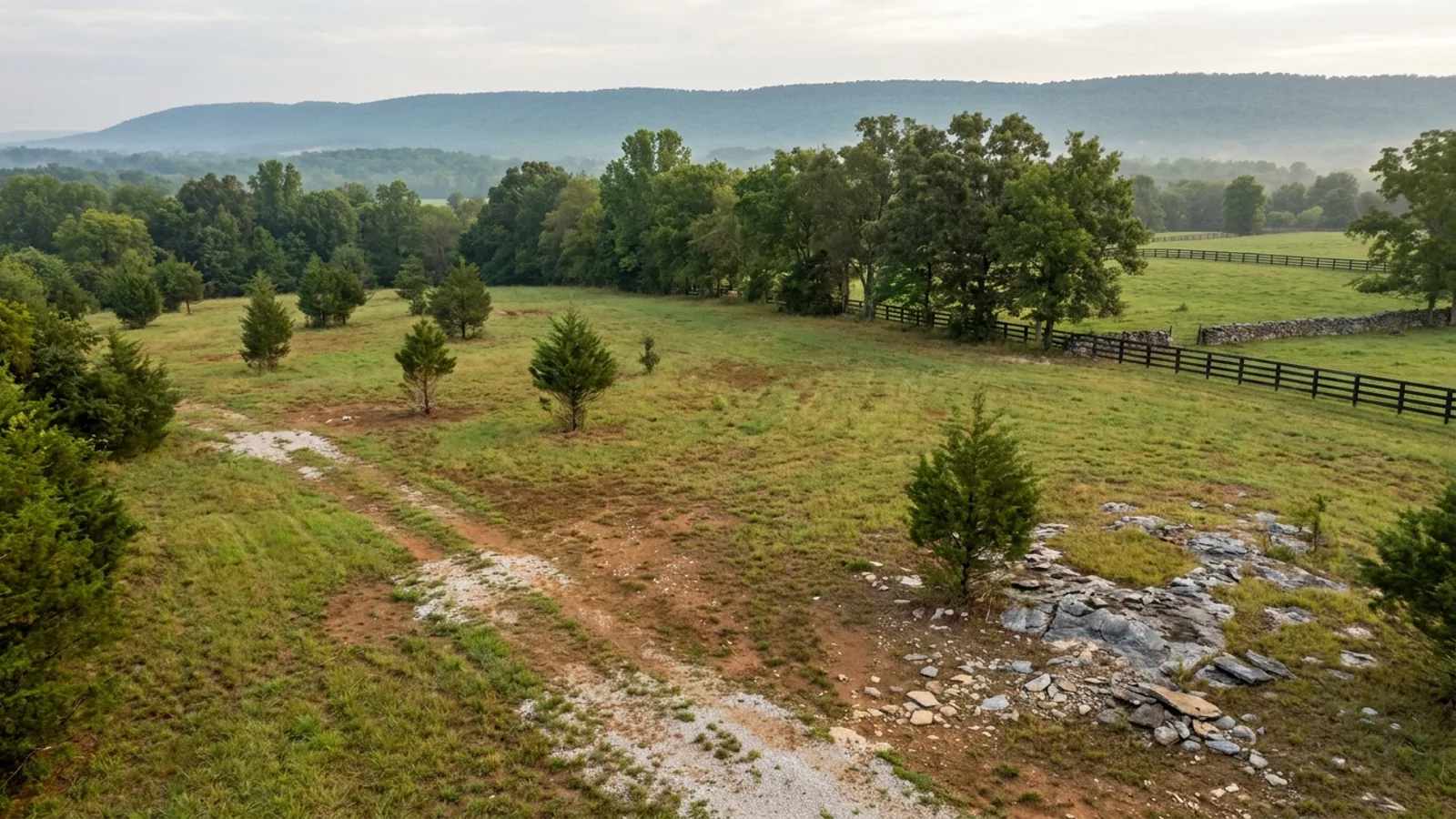
The parcel
Zoning, setbacks, flood zone and utility access get checked before anything is drawn.
Pad and permit
Clearing, grading and a compacted pad, while the submittal works through Davidson County.
Frame to finish
Shell erected and dried in, then systems, insulation and interior finish through to CO.
Those are the rules for Davidson County. Tell us what you want to build and we will draw it to them.
Where we build around Nashville
Davidson County and the rural land around it. The buildable acreage for a project this size usually sits outside the city limits, which is frequently what changes who issues your permit.
Keep reading
The questions that usually come next once you know what Nashville allows.
Barndominium Cost Guide
Sourced per-square-foot ranges by tier and by size, with a calculator built on the same figures.
Read itIs It Legal in Tennessee?
Classification, zoning, the HOA gate, and why "nonresidential farm building" does not cover a home.
Read itHow Long Does It Take?
Census build-duration data, and what actually sets the permit clock where you are building.
Read itSources for this page
The primary documents behind the Nashville figures above. We would rather you checked them than took our word for it.
- Adopted Codes for Metro NashvilleMetro’s current adopted editions.nashville.gov
- Metro Adopts 2024 International Building CodesNashville moved to the 2024 IRC, an edition ahead of the statewide minimum.nashville.gov
- Ordinance BL2025-898The adopting instrument itself, including Metro’s filled-in Table R301.2.nashville.legistar.com
- Zoning ClassificationsMetro’s districts and what each permits.nashville.gov
- Septic and Sewage Disposal SystemsDavidson is a contract county — septic goes to Metro Public Health, not TDEC.nashville.gov
- Residential Jurisdictions & InspectorsThe State Fire Marshal’s own table of every Tennessee county and municipality, with its enforcement status. Stamped accurate as of 21 August 2026.tn.gov
Nearby areas we build in
Others we cover in this part of Tennessee. The permitting authority, the adopted design criteria and the zoning can all differ from one to the next.
Building in Nashville: common questions
9 questions we get asked most often about building in Nashville. If yours is not on the list, ask it directly.
Who issues the building permit for a barndominium in Nashville?
Which code edition applies, and does it match the rest of Tennessee?
What design criteria will an engineer be given for a Davidson County site?
Can I put a big detached shop next to the house?
Is there a minimum house size in Nashville's zoning?
How much land do I need, and where in the county is it?
Do I go to the state for the septic permit?
What fees should I expect at permit issuance?
Does a contractor licence come into it?
What clients say
Turnkey from a cleared lot to certificate of occupancy. What I appreciated most was that when plan review came back with comments, I heard about it the same day along with what they were doing about it.
We had ten acres outside town and no idea what we could legally put on it. They pulled the zoning and the A-1 lot minimum before we spent anything on drawings, which saved us from buying plans for a building that would not have been approved.
Ordered the shell kit and erected it with my brother-in-law over about six weekends. The drawings were clear, the bolt schedule matched what showed up on the truck, and the county inspector had no issues with the engineering.
Building in Nashville?
Start with the plan. Tell us what you want to build and we will draw it, then confirm what Davidson County will actually let you put on the parcel and what wind load it has to meet. That conversation costs nothing.